The Building Was Already There. The Story Wasn't.
Published on March 27, 2026 | AI Strategy
By Taylor Ketcham
Harry Lennix has spent decades making audiences believe in stories. You've seen him in The Blacklist, Chicago P.D., Man of Steel. He is a professional at this craft — the precise work of making a world feel real enough to matter. So when he set out to lead the effort to restore the Lillian Marcie Center, a historic arts building in one of Chicago's most storied Black neighborhoods, it seemed like a natural fit. He knew how to tell a story. And yet, for a stretch of time, the fundraising wasn't moving. This is a pattern worth understanding.
The Lillian Marcie Center — a former Marshall Field warehouse at 4343 S. Cottage Grove Avenue, Bronzeville, Chicago
A Building Named for Two Women Who Changed a Life
The Lillian Marcie Center takes its name from the two women Harry Lennix credits with shaping who he became. Lillian is his mother. Marcie is Marcella Gillie, the principal of Bass Elementary and a mentor who, as Lennix has said publicly, “engendered creativity in hundreds of children.” That is not a brand story. It is a personal one — and it is the kind of foundation that makes a project more than a real estate transaction.
The building itself carries its own history. A former Marshall Field warehouse constructed at the turn of the twentieth century, it sits at 4343 S. Cottage Grove Avenue in the heart of Bronzeville — the neighborhood once called the “Black Metropolis,” home to Louis Armstrong, Nat King Cole, Gwendolyn Brooks, and the institutions that gave the Great Migration its cultural backbone. The three-story brick structure with massive clear-span steel beams is not a blank canvas. It is already a vessel of memory.
The vision for what it becomes is equally ambitious: a 350-seat main performance theater and a 100-seat boutique theater, rehearsal spaces, dressing rooms, a rooftop gathering area, and the future home of the African American Museum of the Performing Arts — AAMPA. A place of employment for Bronzeville residents. A permanent home for itinerant theater companies that have been searching for exactly this. In Harry Lennix's words, the South Side's version of Lincoln Center.
The bones of the proposal were extraordinary. And still, the money wasn't moving at the pace the vision required.
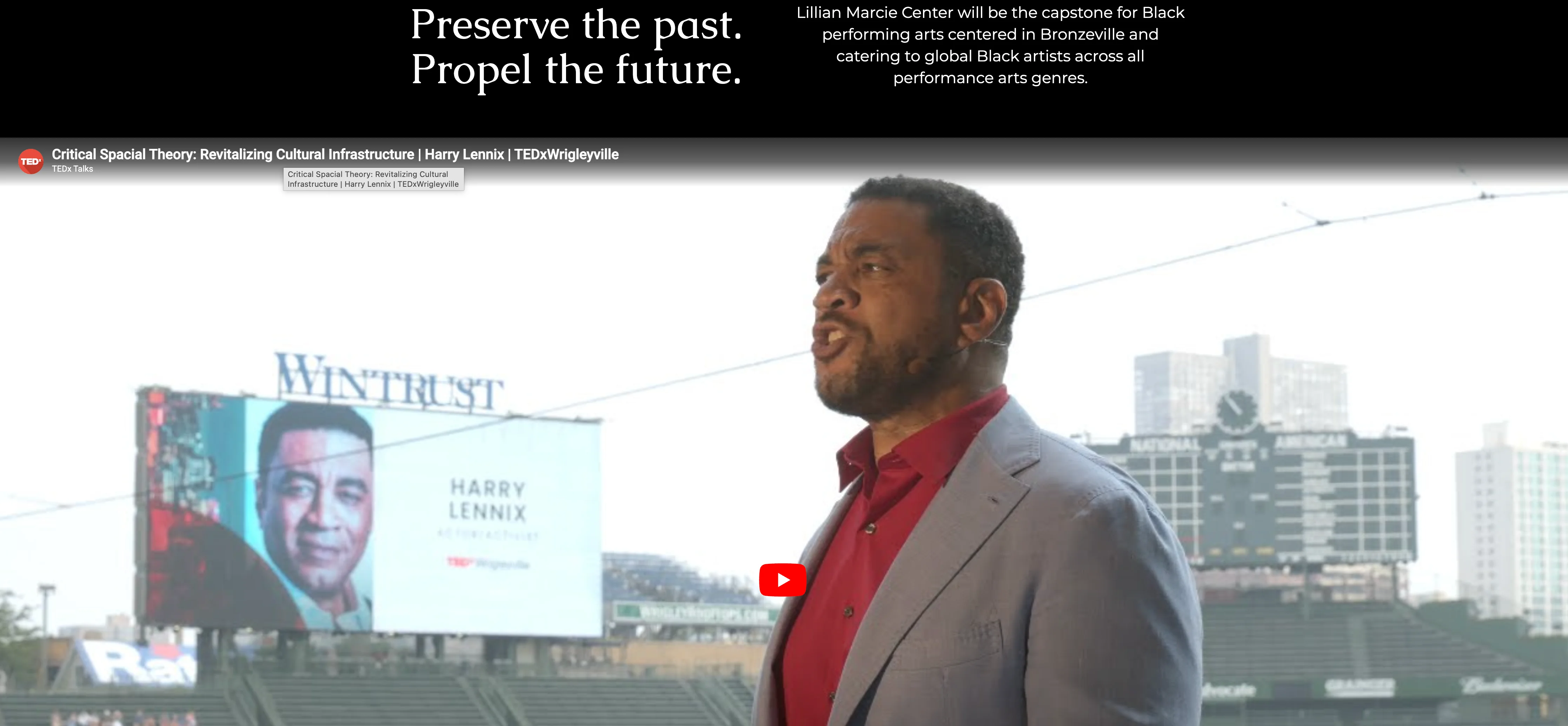
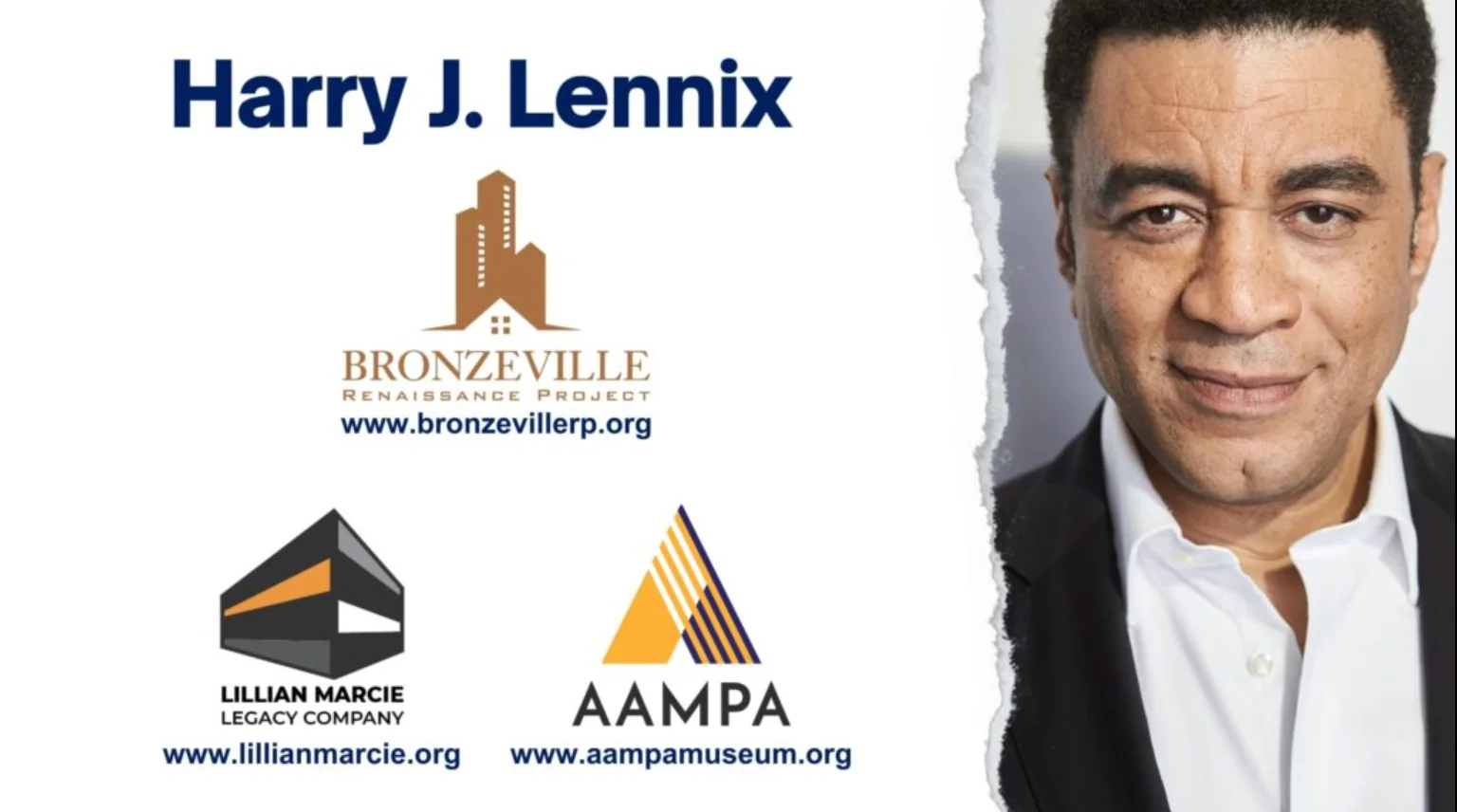
Harry Lennix, President — Bronzeville Renaissance Project
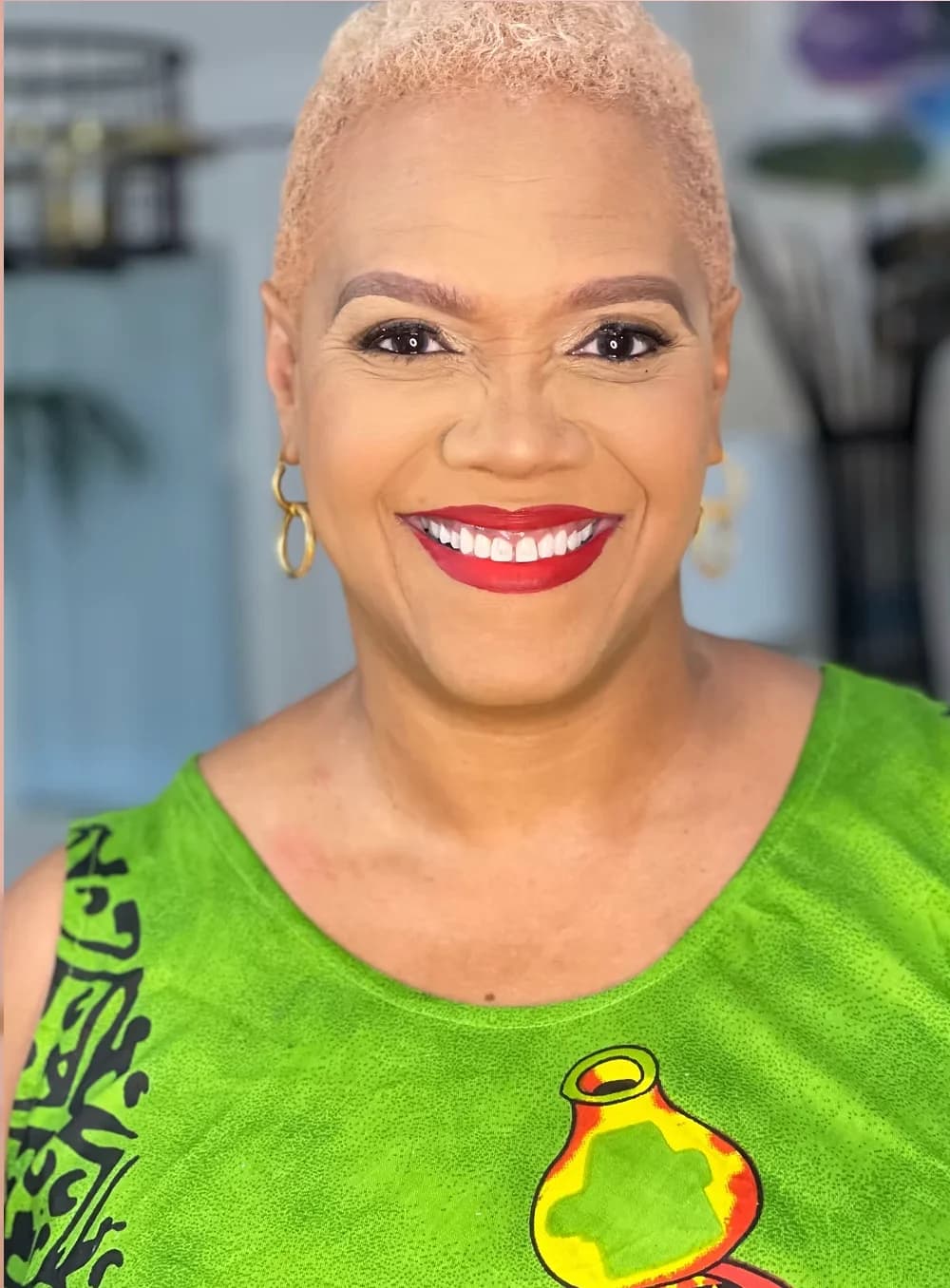
TaRon Patton, Executive Director — Lillian Marcie Center
The Project Wasn't the Problem
When the Bronzeville Renaissance Project needed a team to match the scale of their vision, they turned to IMPOWERU — a St. Louis-based organizational consultancy built to help leaders create workplaces that are aligned, high-performing, and built to last. IMPOWERU then brought in Holistic Consulting as a strategic partner in 2024, and the team assembled with a clear division of expertise across the engagement.
Founded by Jerry Thompson, a former KPMG Tax Principal, IMPOWERU operates on a three-pillar framework — Alignment, Focus, and Flow — drawn from research at Harvard Business Review, McKinsey, MIT Sloan, and Stanford's GSB. Jerry served as engagement lead overall and subject matter expert on legal strategy. Rob Vanderwerf led enterprise strategic planning, master planning, and value chain analysis — providing the structural rigor that anchors a project of this complexity in market and operational reality. We came in through the Vision to Matter framework, taking on research, creative development, coaching, consulting, and the technology layer.
The person at the center of the day-to-day engagement was TaRon Patton — Executive Director of the Lillian Marcie Center, co-founder of AAMPA, former Executive Director of Congo Square Theatre, CEO of GLP Productions, and one of the most accomplished arts executives in Chicago. She had the credentials, the passion, and the deep institutional knowledge of what this project meant. What the team set out to do was make sure she had everything she needed to translate all of that into a pitch that could move.
The existing materials did what most nonprofit pitch documents do: they described the building, outlined the development phases, listed the costs, and presented a financial model. Everything a sophisticated investor needed to evaluate the project was technically present. What was absent was the reason anyone should care deeply enough to commit funds — the emotional through-line that connects a balance sheet to a belief.
This is the hidden pattern in stalled fundraising campaigns.
The project is rarely the problem. The story is. Research from Stanford's GSB found that 63% of listeners recall stories, while only 5% recall a standalone data point. Pitch materials that lead with financials are asking investors to skip the step that actually drives the yes.
What Vision to Matter Uncovered
The Vision to Matter process started not with slides, but with listening. The team spent significant time drawing out the full context — the history of Bronzeville as a cultural and economic engine, the specific lineage of Black performing arts institutions in Chicago, the significance of the Marshall Field warehouse as a site, and what the Lillian Marcie Center would mean in concrete terms for the families and artists within reach of it.
What emerged was a story the original materials had never told. The Lillian Marcie Center was not a building renovation and not simply a nonprofit arts initiative. It was a reclamation — of a neighborhood's identity, of an arts tradition that had shaped American culture, and of the kind of community economic development that creates lasting employment and generational pride. As Harry Lennix has said: “Where the government has fallen short, and where the church has failed, that's where culture can come in.”
The data supports the economic case. The Americans for the Arts AEP6 study places the nonprofit arts sector's national footprint at $151.7 billion in annual economic activity, supporting 2.6 million jobs and $29.1 billion in government tax revenue. The federal Historic Tax Credit program has leveraged $235 billion in private investment since 1976, returning $1.20 in federal receipts for every dollar in credits — and 78% of those projects land in economically distressed communities. This was not a charity ask. It was an investment thesis backed by decades of documented results.
The team built the collateral to carry that story. A full investment pitch deck that led with the human stakes — the personal origin of the name, the historical weight of Bronzeville, the generational impact of arts employment — before arriving at the financial structure. An investor database segmented by funding type: private philanthropists, public grant sources, and structured loan opportunities, deliberately diversified to reduce dependency on any single stream and maximize the number of doors that could open.
“When a vision is genuine and the impact is real, the work is not to invent a story. It's to uncover the one that was always there — and give it the structure and language to land.”
Preparing the Person in the Room
Materials are necessary. Delivery is different. Our team worked directly with TaRon Patton through coaching sessions, role-play, and pitch practice — specifically because presentations with a clear single message are 43% more persuasive than information-heavy ones, and because behavioral economists have documented a fundamental truth about investment decisions: people commit emotionally first, then justify with data. The person making the ask needs to hold both threads simultaneously — the human story and the financial logic — without either undermining the other.
The engagement extended two months beyond the delivery of materials. Regular meetings, strategic guidance, and real-time support as the team went into active fundraising. They were not handed a binder. They left with a clear strategy, a prioritized and diversified investor list, and the full suite of collateral they needed to respond to interest and close commitments — on their own terms, in their own voice.
Why Historic Buildings Are the Most Powerful Asset in the Room
The Lillian Marcie Center sits inside a building that has already survived a century. The Marshall Field warehouse at 4343 S. Cottage Grove has outlasted every economic shock the South Side has absorbed. That longevity is not incidental — it is the argument. Adaptive reuse of structures like this is 15–30% cheaper and up to 30% faster than new construction, and it signals something to a community that new construction cannot: that the people building this believe the neighborhood has always been worth saving.
When an investment pitch can make a funder feel that they are not underwriting a construction project but joining the continuation of a history that already matters — a building that already stands, a neighborhood that already carries its story, a name that already means something to the person who chose it — the decision changes in a fundamental way.
Vision to Matter exists for exactly this gap: when purpose and impact are genuine but the translation to the outside world is not yet working. The framework does not manufacture stories. It draws out the ones already present — in the building, in the name, in the people leading the work — and gives them the structure, the language, and the investor-ready form they need to travel.
If you are leading a nonprofit, a community development initiative, or a purpose-driven organization that knows what it is trying to do but is struggling to make others see it the same way, this is the kind of engagement we do through Vision to Matter Consulting.
Your Vision Deserves to Be Heard
If your project has the impact but the pitch isn't landing, the Vision to Matter framework can help you close that gap — with a full story, investor-ready collateral, and the coaching to deliver it.